|
Pontiac Museum was created and is maintained by the Pontiac Historical Society. Current officers are: Chris Seifried, President, Lyndal Neelin, Vice-President, Marilee DeLombard, Secretary, Peter Haughton, Treasurer. Pearl McCleary, Edith Letts and Lyndal Neelin are curators.
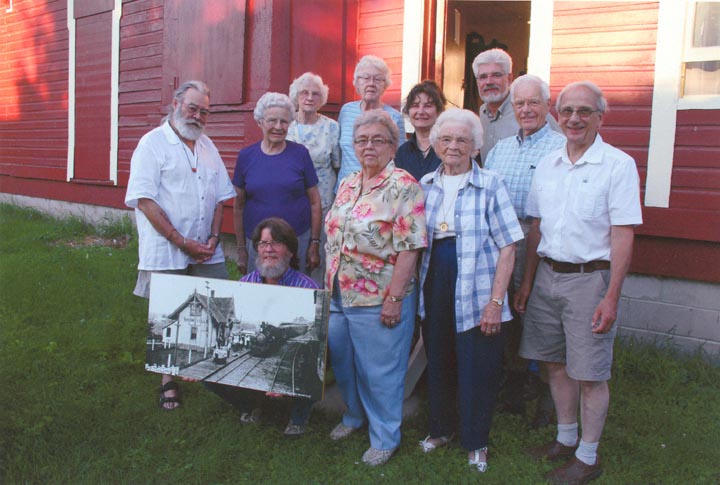
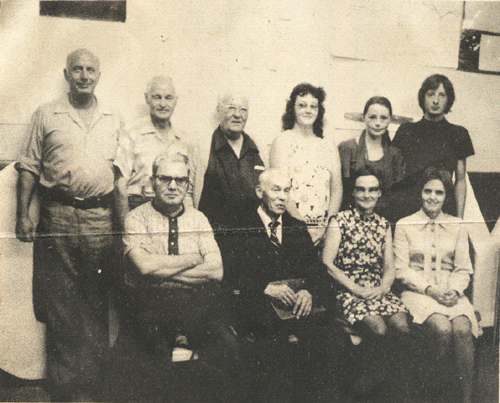
Historical Society members autumn 2010; back left, Leon Baril, Edith Letts, Connie Walsh, Pearl McCleary, Marilee DeLombard, Chris Seifried, William McDowell. Front row, Robert Wills, kneeling with picture of the old Shawville Train station, Elsie Sparrow, Becky Wilson, Peter Haughton. Photo by Joan Bakker Stark. |
Recently, the Museum has sponsored an exhibit in the Virtual Museum/ Community Memories program. The exhibit, entitled The Musical and Agricultural Heritage of Eric Campbell, includes videos sound recordings and photographs from the Steam-Powered Threshing Bees, Fiddler's Jamborees, and more...
AND
The Society is currently sponsoring a follow-up CHIN project, updating the Shawville/Clarendon/Thorne Historical Record Project of 1973. That Opportunities For Youth project involved tape recording interviews with elderly folks. The cassette recordings are being digitized, and photographs made and/or found at that time are being processed, to create another Community Memories Exhibit. Watch for it online hopefully in May 2011.
Digitized versions of the recordings are now on file at the Pontiac Archives in Shawville.
|
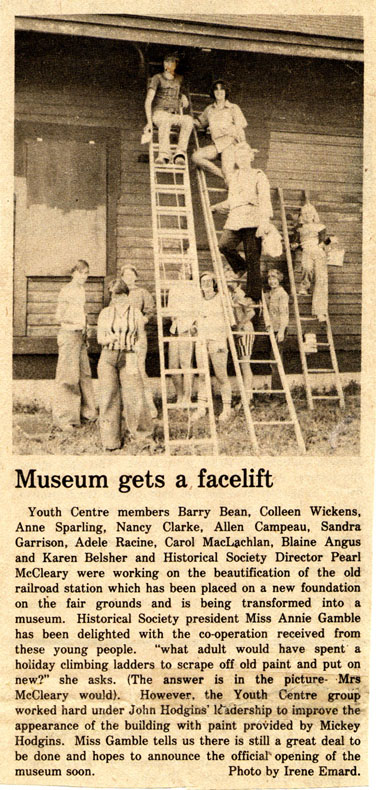
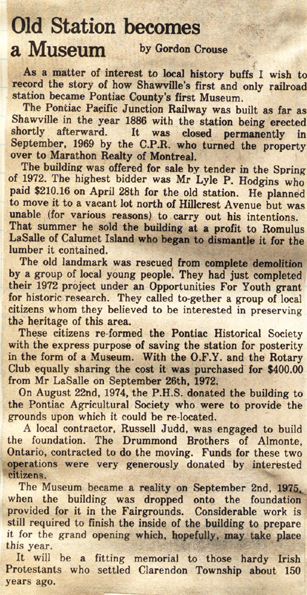
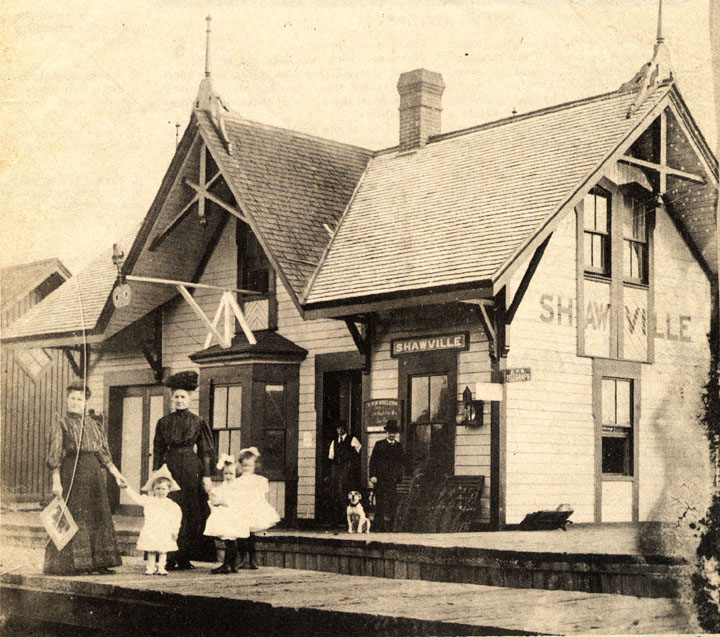
The Shawville station of the PPJ Railroad, as it appeared in its heyday, as the mainstay of transportation up and down the Valley. Click to hear Tom Fishel's ode to the old steam trains. In the early 70's, an Opportunities For Youth project was wrapping up its survey of personal Pontiac histories. It became known that the former PPJ Railway station in Shawville was being sold and dismantled. |
|
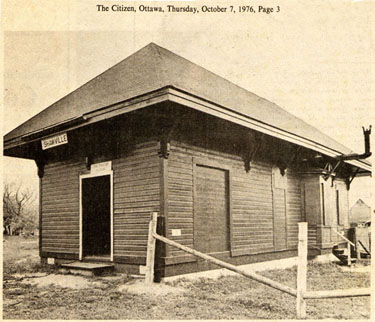
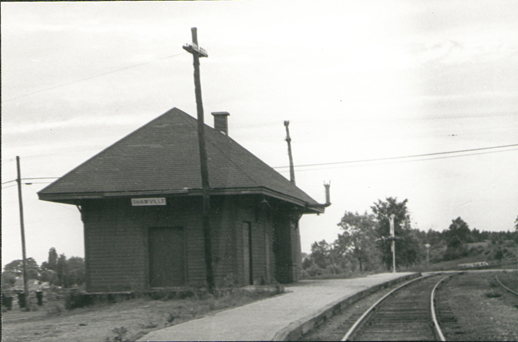
Shawville train station as it appeared in 1972, shortly before being moved. The tracks have since been removed, and the railbed is now the PPJ Cyclopark. A committee was formed and local funds raised to buy the building, move it to its present location at the southwest corner of the Shawville Fair grounds, and establish a museum to display relics of early Pontiac County life. |
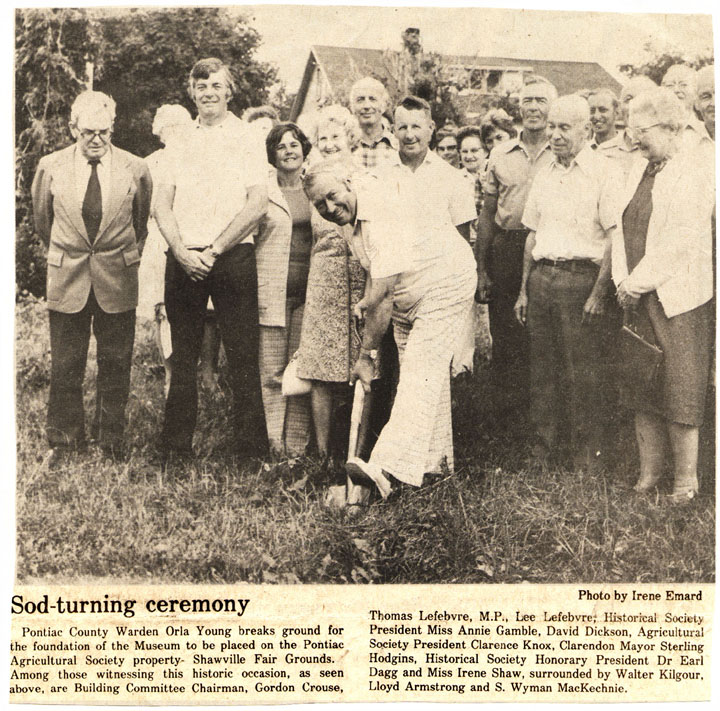
|
The Train Station, moved to its new location, renovated, remodeled and transformed into the Pontiac Museum |
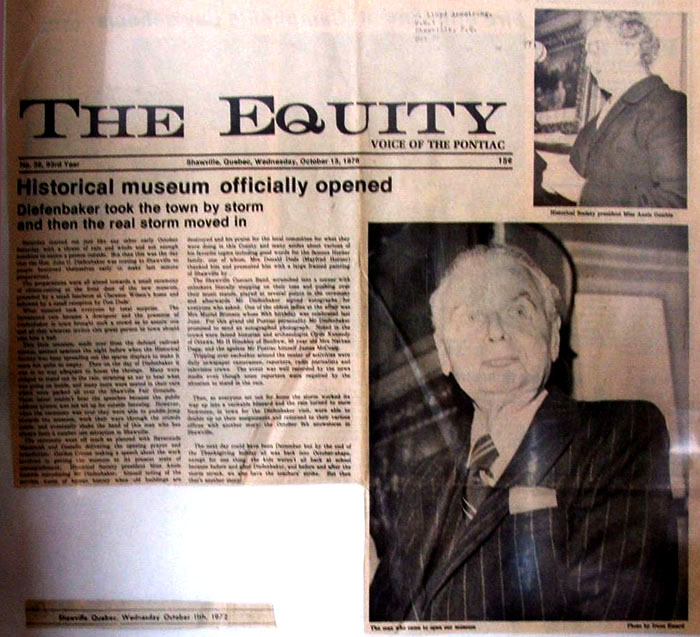
The museum was opened by the Rt. Hon. John Diefenbaker on Oct. 9, 1976.
|
The Museum today
|
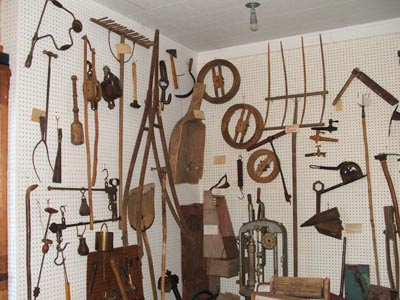
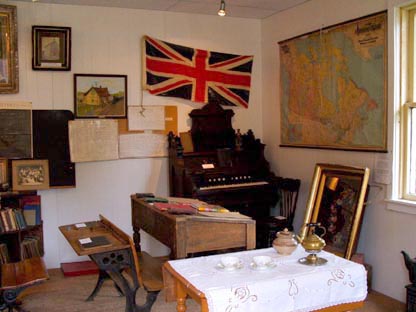
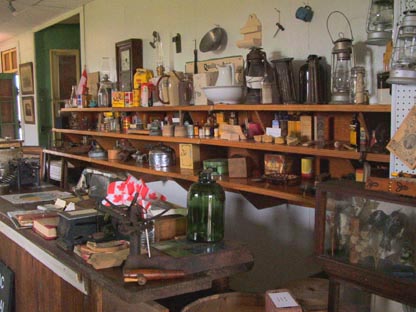
The museum is open for visitors during special events such as Canada Day, the Shawville Fair, weekends in the summer, and regularly hosts field trips for school groups. The museum includes a turn of the century school room, a general store, agricultural tools, household appliances, clothing and other heritage items.
|
|
Some of the many farm tools on display |
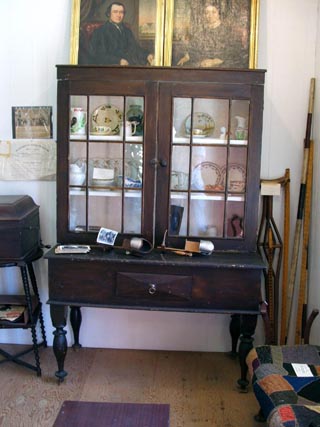
The Parlour, featuring a Victrola, china cabinet and stereopticon |
|
Part of the one-room school display |
The General Store, with a wide variety of goods which such a store would have stocked for the needs of rural households
|
|
During this year's Shawville Fair, around 350 people visited the museum, viewing these and other sights, swapping tales of when they used such tools, attended such a school, shopped at such a store. |
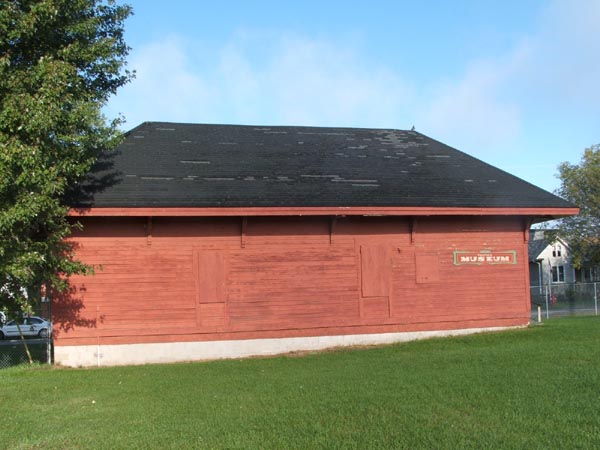
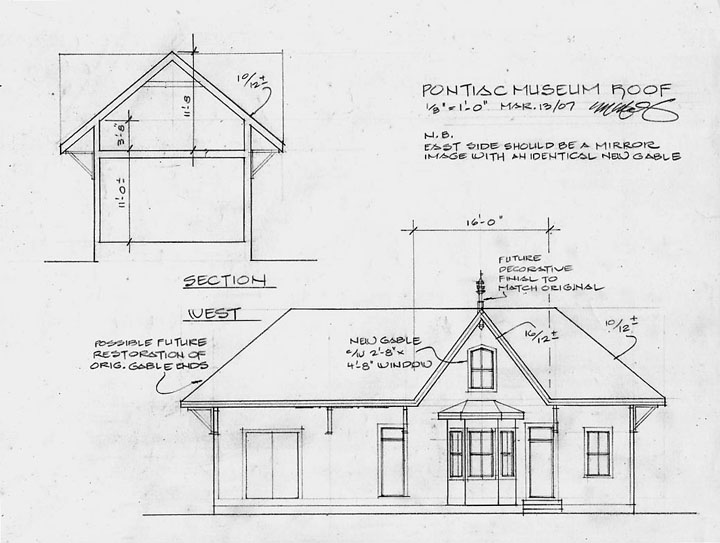
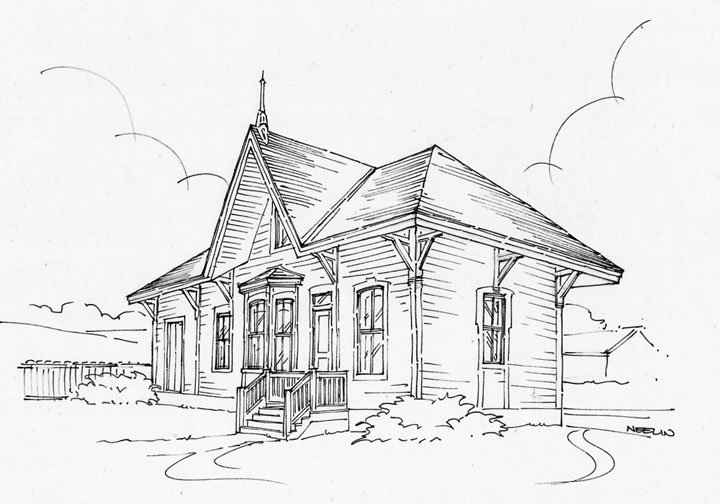
Several years ago, we noticed that the shingle roof, renewed at the time the museum was relocated, was badly worn out and needed to be re-covered before rain leaks in and damages the building or artifacts. Members of the Historical Society, the Agricultural Society (which owns the building, as part of the Fairgrounds) agreed that the roof should be recovered. It was further decided that the dormers which previously had graced the roofline should be rebuilt. It added to the construction costs, but adds to the beauty of the building, and will open the upstairs to future usage. Michael Neelin has drawn this elevation to show how the building will look with the dormers restored, but the gable ends in the present truncated hip roof style; to restore the old full gables would require extensive dismantling and rebuilding, and so would be prohibitively expensive. |
|
And this artistic rendering of how the museum will soon appear, with the shingles replaced, and the two dormers rebuilt. |
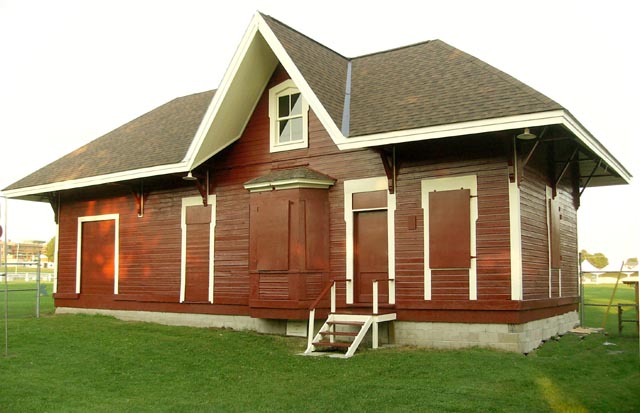
This is the museum, as of August 2009
Other relevant sites:
Quebec Anglophone Heritage Web Magazine
web page assembled by Robert Wills, president of Pontiac Historical Society, 2006
last updated
Jan. 2011